
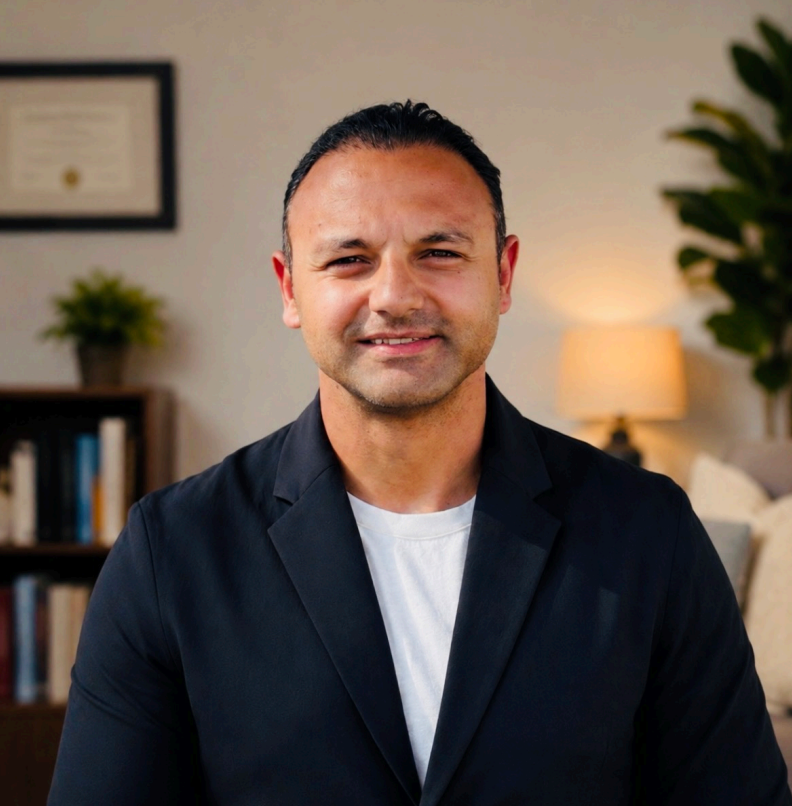
About Istvan
Hi, I’m Istvan Dioszegi, a trauma-informed therapist in Arizona. I work with individuals, couples, adolescents, and families who are navigating anxiety, shame, perfectionism, emotional disconnection, conflict, and relational patterns that can feel difficult to shift. I believe many of these struggles are rooted in emotional deprivation, attachment wounds, and complex trauma and that healing is possible through safety, connection, and integration.
I understand complex trauma as chronic relational deprivation that shapes the nervous system, internal parts, and core beliefs around survival rather than connection. Over time, protective strategies such as control, avoidance, perfectionism, anger, emotional shutdown, or people-pleasing can develop. While these responses often make sense in the context of what you’ve been through, they can also create distance from your authentic self and from the relationships you want most.
A central part of my work is helping clients create enough nervous system safety to slow down, build awareness with compassion, reconnect with unmet emotional needs, and move toward self-acceptance. I’m especially focused on supporting clients in reconnecting with their Original Self—the part that remains whole beneath survival patterns and trauma responses—so that emotions can be processed and life can be lived with greater presence, clarity, and meaning.
My approach is shaped by both clinical training and lived experience. As a former professional athlete and former officer within the Romanian Intelligence Service, I understand resilience, performance under pressure, discipline, trauma, and identity. I bring a mind-body and relational lens to therapy and strive to create a space where you feel emotionally safe, seen, supported, and understood—because while wounds often happen in relationship, healing also happens in relationship.
Istvan Dioszegi
Trauma-Informed Therapist - In Person & Virtual
Book A Session With Istvan Dioszegi
Credentials & Details
License: Licensed Associate Counselor (LAC)
AZ License #: LAC-23507
Sessions: In-person + Virtual
Pronouns: He/him
Adolescents
Adults
Who Does Istvan Help?
Couples
Families
Groups
What Are Istvan’s Focus Areas?
Complex Trauma & Attachment Wounds - Emotional Deprivation - Anxiety & Emotional Dysregulation - Grief & Loss - First Responders & High-Performance - Men’s Issues - Women’s Issues - Relationship & Couples Therapy - Adolescents & Family Systems - Self Worth, Shame & Identity Development - Addiction & Maladaptive Coping Patterns - Nervous System Regulation & Emotional Integration - Optional Faith-Based/Christian Counseling
Therapy Modalities
AEDP
EMDR
IFS
Ego State Therapy
Restorative Therapy (RT)
EFT
Gottman Method Couples Therapy
Ketamine-Assisted Psychotherapy (KAP)
Polyvagal-Informed Interventions
Istvan’s Style & Approach
Compassionate, trauma-informed, and integrative. Balances curiosity with structure to help clients slow down, practice self-compassion, and reconnect with their authentic self. Provides practical guidance and clear direction within a supportive therapeutic relationship.
What to Expect From a
Therapy Session with Istvan
What do the first 4-6 therapy sessions look like?
During the first four to six sessions, clients can expect to build a strong therapeutic relationship while developing a deeper understanding of themselves and the patterns that have shaped their lives. Together, we will explore your family of origin, attachment experiences, emotional deprivation, and the survival strategies that may have developed in response to past wounds or chronic stress.
As therapy progresses, we will begin identifying the connection between your nervous system, emotions, thoughts, behaviors, and relationships. Depending on your goals and readiness, interventions may include approaches such as AEDP, EMDR, Internal Family Systems (IFS), somatic awareness, or other trauma-informed modalities to support healing and integration.
The early phase of therapy is centered on creating safety, increasing self-awareness, and building the internal resources needed to process difficult experiences at a pace that feels manageable and respectful of your unique journey.
What does progress look like during therapy?
To me, healing is a journey of creating safety, developing awareness, fostering connection, and cultivating self-acceptance.
Progress often involves understanding how early experiences, attachment wounds, and emotional deprivation have shaped your nervous system and internal world. As therapy unfolds, clients frequently develop greater self-awareness, respond with compassion instead of self-criticism, regulate emotions more effectively, communicate needs more clearly, and experience healthier, more authentic relationships.
I believe healing occurs when individuals reconnect with their Original Self the resilient and authentic part of themselves that exists beneath trauma and survival adaptations. Progress is reflected in increased nervous system flexibility, the ability to tolerate and process difficult emotions without becoming overwhelmed, and making choices guided by presence, connection, and personal values rather than fear, shame, or old protective patterns.

Ready to get started?
Fill out our form